
A Cybersecurity Leader on Protecting Your Business, Your Data, and Your Purpose in the Age of AI with Diane Watson
Listen to the episode on Spotify and Apple Podcasts
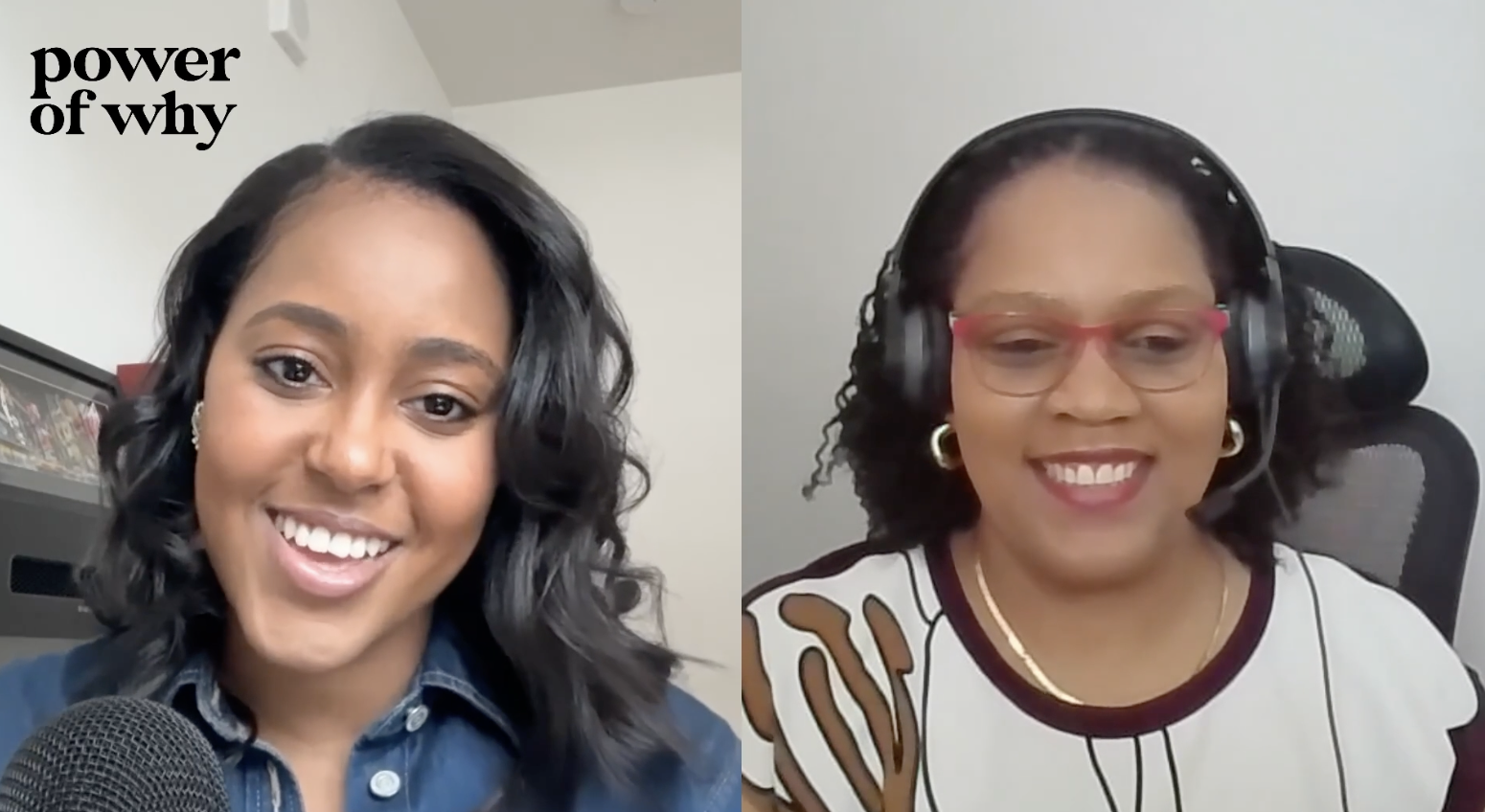
Listen to the episode on Spotify and Apple Podcasts
This episode is brought to you in collaboration with Invest Ottawa, Ottawa’s lead economic development agency for knowledge-based industries. We teamed up to produce this special podcast series to celebrate women leading in Ottawa during International Women’s Month.
In support of its Women Founders and Owners strategy, Invest Ottawa offers programs and services that enable and accelerate the growth and success of women entrepreneurs from every walk of life.
Visit www.investottawa.ca/women to learn more!
"In an abundance of water, only a fool is thirsty. And here it is that we're living in this great abundance, especially with technology. Everybody's connected. If you want to learn anything, it's right there. Now, how do you determine what is relevant to what you need to do?" - Diane Watson
Diane Watson is an illustrious technology leader with over two decades of experience in telecommunications, cloud technologies, and cybersecurity, Diane has held senior roles at global firms such as Nokia and Fujitsu, and is currently leading product security initiatives as a Product Security Program Manager at Ribbon Communications.
Diane has been a driving force behind inclusive leadership in Canada’s tech ecosystem, serving on the Women in Communications and Technology National Capital Region board for seven years. Fun fact: this is how Diane and I officially crossed paths.
Diane now serves in an advisory capacity as Past Chair, while also holding the role of Vice President of Advocacy and Partnerships at Tech2Step Canada, a national nonprofit creating mentorship and networking opportunities. She also contributes her expertise as a member of Invest Ottawa’s Women Founders and Funders Subcommittee, supporting the advancement of women entrepreneurs.
Known for blending technical excellence with purpose-driven leadership, Diane is deeply committed to mentorship, community building, and creating pathways for underrepresented voices to thrive in Canada’s innovation economy.
Diane shares how curiosity, community, and a willingness to start over have shaped both her professional trajectory and her sense of purpose.
We Talk About What Matters
You're a founder or entrepreneur who has been putting cybersecurity off - and you're ready to change that.
You're curious about what it looks like to build a career spanning multiple continents, industries, and technological eras.
You're in a transition—job loss, a pivot, a reinvention—and need a framework to find your footing
You're scaling with AI and want to know how to move fast without leaving yourself exposed
You're building community and want to learn from someone who's turned networks into ecosystems
Looking for a specific gem?
[03:50] Growing up in Jamaica, choosing computer science, and discovering her career by accident
[07:42] The evolution of tech: from mainframes to wearables, and why a curious mind is non-negotiable
[10:26] Discovering ikigai and how Diane found her mission at the intersection of tech, women, and people of color
[13:44] The moment that changed everything: meeting two young African graduates who couldn't break into tech, when she knew they needed people in tech.
[15:53] Why visibility matters and the young woman who told Diane she'd never seen anyone who looked like her
[17:36] Cybersecurity for small business owners: the three areas every founder should protect
[19:55] The danger of oversharing, what you post publicly can become a tool for social engineering
[20:59] Prevention vs. cure: why cybersecurity is insurance, not overhead
[26:20] Balancing speed and security, lessons from program management on both sides of the tension
[27:47] Coded Bias, deep fakes, and the rise of AI-generated phishing: what's coming and how to stay sharp
[32:00] "It all boils down to risk" and how to assess what assets need protecting in your business
[34:43] How Diane's definition of success has shifted from climbing to contributing
[37:53] Does having a clear purpose help you navigate uncertainty?
[38:51] Adaptability as a power skill and why community is the most underestimated resilience tool
[40:28] Losing her job, reconnecting with the community, and how Tech to Step Ottawa was born
[43:02] The Give to Gain event: ending International Women's Month with refilling, not performing
[46:54] The book Diane has been sitting on for 10 years, a cybersecurity adventure story for young girls
[58:23] What's next: the manuscript is done, and Ava and her dog Byte are almost ready for the world
Conversation Transcript
Naomi Haile 00:00
Hi everyone, welcome to another episode of The Power of Why podcast. My name is Naomi Haile, and today I am here with the incredible Diane Watson. Diane, how are you doing today?
Diane Watson 00:56
I'm doing well, Naomi. I know it's Family Day here in Canada, but I'm happy to be here spending it with you. We have crossed paths so many times, I feel like I know you, and I've admired how much you have grown and moved in this space and all that you do for the world. Congratulations on your podcast and your business in general. What you're doing is really inspirational, and I'm just happy to be here.
Naomi Haile 01:22
Thank you. We've crossed paths so many times, and every time we meet, you're sharing a new project you're working on and building. To see your vision and the incredible things you're doing is very inspiring. Thank you for being here on this series we're launching with Invest Ottawa. Diane is a featured leader selected to be spotlighted on the podcast series alongside five other incredible female leaders in the Ottawa ecosystem.
Diane Watson is an illustrious technology leader with over two decades of experience in telecommunications, cloud technologies, and cybersecurity, having held senior roles at global firms such as Nokia and Fujitsu. With a proven track record in program management, innovation, delivery, and stakeholder engagement, Diane is currently leading product security initiatives as a Product Security Program Manager at Ribbon Communications.
Diane has been a driving force behind inclusive leadership in Canada's tech ecosystem. She served on the Women in Communications and Technology National Capital Region board for seven years which is actually how we first met and now serves in an advisory capacity as Past Chair, while also holding the role of Vice President of Advocacy and Partnerships at Tech to Step Canada, a national nonprofit creating mentorship and networking opportunities. She also contributes her expertise as a member of Invest Ottawa's Women Founders and Funders Subcommittee, supporting the advancement of women entrepreneurs. Known for blending technical excellence with purpose-driven leadership, Diane is deeply committed to mentorship, community building, and creating pathways for underrepresented voices to thrive in Canada's innovation economy.
Again, Diane, it's so great to have you here. I'd love for you to start by sharing a little bit about how you grew up. Were you encouraged to color outside of the lines, or to stay within them? How did that shape how you navigate the tech world today?
Diane Watson 03:52
It sounds like a lot when you put it all together it seemed just like yesterday. I'm originally from Jamaica and grew up in what we'd call a middle-class family. My father was a doctor. I was always someone who colored within the lines, did everything that was expected, did very well, and was good at the sciences. I loved math. Everybody expected me to follow in my father's footsteps and become a doctor. But while I didn't know what I wanted to do, I knew what I did not want to do, which was become a doctor.
My first exposure to computers was in around ninth grade, when I was fortunate enough to encounter my first Macintosh. But it never really sparked anything at the time. When it came time to go to university at the University of West Indies, I chose sciences but they were just starting a new computer science degree. I thought it was really through laziness that I didn't like the long labs I'd heard about in natural sciences. So I said, this computer science thing sounds new and exciting. Why not try it?
Little did I know. When it comes to programming and debugging, and back then with scarce resources, we literally had to book computer time and fight for it. But that's how I got into tech quite by accident. And interestingly, I started interning at IBM in Jamaica, which was one of the largest technology companies at the time. I witnessed the rollout of the internet firsthand. I then got my first job at Fujitsu Caribbean, one of IBM's rivals, and got to work across professional services, support, account management, and sales.
About six years in, I faced the traditional fork in the road: do an MBA or continue with further studies, but internationally. That's how I got to Canada to do my Master's in Computer Science. And that, in essence, is how I got into tech quite by accident. But I've always been curious and interested in how everything works. To go from interning on mainframe technology to now wearing a smartwatch it's not for the faint-hearted, but it's never boring.
Naomi Haile 06:55
What a journey. I'm very happy you stayed in tech throughout all of that time. In ninth grade, you mentioned your first exposure to a computer at school. Were you always accessing computers in a school setting, or were there other ways you were exploring outside of that?
Diane Watson 07:24
It was always in school back then. Everything was standalone; the concept of being connected didn't even exist. It was all desktop, all local. At one point, because of the scarcity of resources on campus, I actually had to purchase my own computer to complete assignments without waiting in line. That access definitely piqued my interest. It's a bit similar to Bill Gates in that sense. Having continual access gives you an advantage, and I'm grateful for that.
What I always try to impart to folks is: don't just do the bare minimum. You go in, you do what you have to do, you go home. I've never been about that. If you don't have a curious mind, tech is not the place for you, because it's constantly changing. And right now, what we're seeing is probably the most exponential growth I've witnessed in my career. Everything is really lifting off it's overwhelming for a lot of people, but it's never boring.
Naomi Haile 9:56
Before we get into all of that, I'd love to set the context for your mission. How do you think about the work you're currently doing? Especially as a Black Jamaican woman who had her introduction to tech in Jamaica and then moved to Canada how do you look at your positioning in this space?
Diane Watson 10:26
I have to speak to it from a philosophy I encountered is the concept of ikigai. For those who don't know, it's a Japanese term that originates from a region of Japan known for its centenarians. It's all about your purpose, your raison d'être. It's the confluence of four questions: What do you love? What are you good at? What can you be paid for? And what does the world need? The intersection of all of that is your purpose. Mark Twain famously said the two most important days in your life are the day you're born and the day you find out why.
When I first got into tech, it was what I was good at and what I could be paid for, not necessarily my passion. It was paying the bills. The shift happens later in life, when you're raising a family and start asking: is this really what I want to do for the rest of my life? I started expanding my networks, and through Nokia's women's group, I started to notice just how few women were in tech. I used to walk into rooms and assume it was normal. And as a woman of color in Canada. I didn't expect to see many Black people in tech, so I wasn't surprised. I just thought, this is what it is.
But then I started digging deeper, and that's when the passion really ignited. I was doing community work at the time advocating for a friend diagnosed with leukemia, trying to encourage people of color to consider stem cell donations. I was working with community leader Sophia Jacob, and during one presentation, two young people of color came up to me. They had come from Africa, completed their degrees in Canada, and couldn't get a job. They were frustrated. And here I was, in tech, where we desperately need people.
That struck me right then and there. I thought: this is what I should be doing more of. That's when I started volunteering with organizations like Jaku Konbit and wherever I could encourage young girls, because studies show that girls tend to lose interest in STEM fields around Grade 7 or so. The goal was to get them exposed early enough that they could find their place in it.
Naomi Haile 14:40
So many important threads there. Community building, and just knowing there are people who look like you in these spaces that absolutely increases the chances of staying with it, even when pursuing STEM degrees in university. And I met your daughter too. She is so focused and very much in the science world. She had an incredible role model in you throughout her years.
Diane Watson 15:32
You take it for granted, you know? I remember doing a talk once, and a young woman came up to me afterward and said she never thought she would see someone like me. That's when it struck me I had never considered that my presence alone could encourage someone to say, 'Okay, I can do this. I can come into this space, even though I don't see many people who look like me, because she has done it.' That's a powerful thing to realize.
Naomi Haile 16:25
I think we underestimate being a possibility model for people. For those who weren't even aware these were pathways to pursue seeing someone like you opens entire worlds. I'd love to shift into cybersecurity now, because you've spent years in that space. For the founders and entrepreneurs who listen to this show, people who are building companies, with or without employees, and who might treat cybersecurity as an afterthought. What are the things they absolutely need to consider as business owners? Especially now, with AI and deep fakes changing the threat landscape so quickly.
Diane Watson 17:36
I primarily work with large telecom companies, so a lot of my focus is on complex, critical infrastructure things like the internet itself. But the same principles apply at any scale. Even companies like Nokia and Ribbon Communications, with large security teams, are kept on their toes. It's really tough. And it's getting worse with AI, because AI now introduces what we call non-human identities autonomous agents given significant access. So let me narrow it down to three main areas for your audience.
The first is protecting your identity. Ensure your passwords are strong use phrases, which are easier to remember, long, and you can add a couple of numbers and special characters. Enable multi-factor authentication, or MFA. Because even if someone has your password, they'd also need access to your phone or another device to get in.
The second is protecting your data. Your data is your gold your currency. Treat your clients' data and financial information with the utmost care. For sensitive transactions like payroll, consider using a separate account and email that isn't publicly searchable. And be mindful of what you share online, because attackers can use that information your dog's name, your habits, your routines to guess passwords or craft targeted attacks.
The third is having a backup plan. In the event of a disaster or a breach, do you have a redundant copy of your data? Most people don't own their data outright they're subscribing to a service. Think of a backup as insurance. You may think it's expensive, but what's more expensive is a breach. I heard of a case in Europe where attackers broke into a psychiatry clinic's systems, accessed patient records, and demanded ransom threatening to expose private client information if they didn't pay. That's just a clinic. They are vulnerable. Think about the services you offer and what it would mean for your clients if that data were exposed.
One more thing: most breaches right now involve human employees it's an inside job. So if you have staff, that's another layer to think about.
Naomi Haile 22:02
That was probably the clearest, most understandable breakdown I've heard on this topic. And what you mentioned about being mindful of what you share publicly it's remarkable how freely people share that same kind of information with AI conversational tools. People upload financial records, client transcripts, client information and when you don't know what these tools do with that data in the future, there are so many potential touch points for information to leak.
Diane Watson 23:03
Exactly. AI learns from data it crawls the internet for. If you expose your client data through the prompts or tools you're using, you could be in breach. Especially with free tools. We love free, right? But is it secure? Could it come back to haunt you?
I like to use the airport analogy. You'd love to just walk straight onto the plane there was a day when that was possible. But now there are cameras, passport checks, security gates. Think about the digital equivalent of that for your business. You don't want Fort Knox that would turn off your customers but always maintain a log of what's happening so you can report and respond if something goes wrong.
A lot of small businesses can't afford security teams, and the software can be expensive. But think of it as an essential cost, like insurance. I hate paying insurance, but if something happens, you're very glad you have it.
Naomi Haile 25:07
And then you're very happy you have it. Exactly.
Diane Watson 25:12
An ounce of prevention is worth a pound of cure, as they say.
Naomi Haile 25:18
You mentioned free tools and in my mind, nothing is truly free. In those cases, you're paying with your data. So I'm curious: in your role in cyber, you sit at the intersection of innovation and protection. How do you balance security with the speed of doing business? Especially for solopreneurs and small businesses who are using AI and automation tools to scale, but also want to remain competitive?
Diane Watson 26:12
It's funny you ask that, because as a program manager, I've experienced both sides. On one side, you need speed get the product out, meet the deadline, time to market. On the other side, as a quality manager, there are gates to pass through, requirements to meet. It can feel schizophrenic. The honest answer is that it comes down to risk how much risk is your business willing to tolerate?
This is actually what's playing out right now with AI broadly. Regulatory bodies are coming in late. In the early days of AI and even now advocates like Dr. Joy Buolamwini, who created the Algorithmic Justice League and produced the documentary Coded Bias, were raising alarms about representation and the need for regulation. Innovators and creatives don't always want to hear that. They want to get their products out fast, because everyone wants to be first. But in doing that, you can harm people. We're experimenting with people's data, and that harm is real.
So it's a tough balance. You have to decide: what is it that I'm protecting, and how much risk can I tolerate while still putting myself out there?
Naomi Haile 28:37
I did watch Dr. Joy's documentary on Netflix Coded Bias and it's really eye-opening.
Diane Watson 28:46
Her organization, the Algorithmic Justice League, does important work especially around facial recognition. And on the topic of deep fakes: someone can clone your voice. That's phishing social engineering and it's on the rise. It used to be easy to spot: poor English, obvious errors. Now AI writes those emails, and it's not obvious anymore.
My advice: stay informed. National organizations like the Communications Security Establishment (CSE) in Canada are putting out a lot of awareness content. Become a little more informed, just like you'd research which bank to use or how to protect your home. And use the same technology to learn and ask ChatGPT to act as a security expert and give you recommendations as a small business owner. Then challenge what it tells you. Verify it. Don't just take it at face value.
Naomi Haile 30:13
Exactly. Take everything with a grain of salt and verify every response. There was something you mentioned around building community-wide protection practices. The phishing example you gave where someone could clone your voice or image and use it to get to people in your circle. What are some practices people can build together as a community to stay aware and protected?
Diane Watson 31:29
I'll be completely honest: it is hard to keep up. What you learn today can feel obsolete tomorrow. And that's why it comes back to risk tolerance. What am I protecting? You don't want to be so afraid that you won't put yourself out there; you have to be willing to take risks. But understand what you don't want exposed, and take steps to secure it. Encrypt it if necessary.
I like to use the car analogy. If you have an old, beat-up car, you're not going to install a state-of-the-art security system. But if you have a car that's a known target for theft, you're going to lock it in the garage and add layers of protection. The same logic applies to your business assets. When you travel, you put your passport and jewelry in the hotel safe. You're not as worried about your clothes. Figure out what is critical to your business, and protect accordingly.
Naomi Haile 34:06
This is really great. Thank you for sharing all of that. Diane, you mentioned ikigai earlier that concept of purpose at the intersection of what you love, what you're good at, what the world needs, and what you can be paid for. As you've moved through your career, how has your definition of success evolved?
Diane Watson 34:43
It has evolved, and it's really made me reflect on the bigger question: why are we here? And that's different for different people. It all goes back to what you value. For me personally, it's become much more about giving back about being here to serve. In leadership, I try to lead with empathy and create the conditions for people to be their best selves. That's where I find fulfillment.
So success, for me, is no longer necessarily about being happy all the time, it's about being fulfilled. What am I going to leave? How can I leave the world in a better place? Early on in your career, you're focused on just getting by. But you reach a point where you ask, what is all of this for? That ties back to the ikigai. What is my purpose?
Simon Sinek talks about starting with your why people remember why you do something, not what you do. And there's a famous lyric from Bob Marley's song 'Rat Race' that I think about: in an abundance of water, only a fool is thirsty. We are living in great abundance, especially with technology. If you want to learn anything, it's right there. The challenge is wading through it and understanding what's relevant to your purpose, your ikigai. For me, being able to guide people toward that is a core part of my mission.
Naomi Haile 37:53
That's very powerful. Do you feel that having clarity on your greater purpose has helped you navigate this moment this season of so much uncertainty and change? People seem more on edge than ever. Has that clarity given you more ease, or at least more awareness?
Diane Watson 38:51
I hate to be cliché, but the only constant is change. The World Economic Forum's 2025 Jobs Report highlighted adaptability as the most critical power skill, not just soft skill, power skill of our time. And I think it's true. The world is always going to feel uncertain, no matter your age or stage. You're always going to feel what's happening. That's why, in my opinion, you have to have community. We are not put on this planet to get through this thing called life alone.
I'll be the first to say I don't have all the answers. But when you're facing something that feels overwhelming, the mindset shift matters. Instead of 'the world is coming to an end,' try 'here is a problem, how can I approach it?' And if it's something beyond your control, you have three options: leave it, accept it, or adapt to it.
A year or so ago, I lost my job. During that period, I got back out there and reconnected with people. That's actually around the time I crossed paths with you again. And I call it community as medicine because in that season, reconnecting and having real conversations helped me realize how many people were in similar situations. There was a common thread of isolation, especially among newcomers. That's what led me to Tech2Step Canada. When I saw what they were doing, it immediately resonated. We started with some exploratory walks in Ottawa, and the turnout was remarkable. I remember one young woman who had just moved to Canada, didn't know anyone, saw the event on LinkedIn, and showed up. We just walked and talked, no lectures, just real conversation. And that's the Jamaica in me: no problem, man. Let's just walk and talk and figure out this thing called life together.
From that, we're now launching an event called Give to Gain: Restore, Reflect, Reconnect wrapping up International Women's Month on March 31. The theme is about giving back to ourselves first, before we can give to others. Your health is your first wealth. Your mindset matters. And community, the power of networking and showing up for each other, is what opens doors that aren't advertised anywhere online. That happened to me. It can happen for others too.
Naomi Haile 45:50
That's an incredible call to action. For those in Ottawa, Montreal, Toronto, or nearby come through on March 31. And before we wrap up, I know you've been working on a book you've been sitting with for ten years. Why now?
Diane Watson 46:54
So, to give a bit of backstory. My daughter would have been about eight or nine when the idea first came to me. When she was younger, there were shows like Dora the Explorer that introduced kids to language and culture in a fun, educational way. But once kids hit the preteen years, I noticed there weren't many shows or books that introduced girls to STEM in that same kind of engaging, story-driven way. Given my community work encouraging young girls into tech, I thought: what better way to do it than through storytelling and entertainment?
I had the idea in my head for years, but life raising kids, working in tech meant I never put pen to paper. Then, when I found myself between jobs, I thought: why not now? I got introduced to a publishing company and started writing.
The book introduces young people to cybersecurity, network technologies, and AI through the eyes of a protagonist, a 10-year-old girl named Ava and her dog, Byte. They go on adventures surfing cyberspace incognito, which weaves in the cybersecurity themes. And I also wanted to intertwine the importance of learning about other cultures so as Ava and Byte journey through different places, readers learn about those cultures alongside the technology.
I've just finished the manuscript, so the next steps are ahead of me. Life is a marathon, not a sprint. Nothing before its time. But when it's ready, I'll let you know.
Naomi Haile 49:26
I love all the themes, especially the integration of different cultures. For folks who don't know much about the telecom space or networks, what an introduction through storytelling. When you were sharing the visuals with me at an event last year, I was blown away by your creativity. So, Diane, what is the best place for people to connect with you?
Diane Watson 50:02
LinkedIn is the best place, just search Diane Watson. And coming soon, follow Tech to Step Ottawa, as well as the Women in Communications and Technology National Capital Region. We'll be sharing more details about our upcoming events as they're finalized.
For March 31, we have an incredible lineup: Jacqueline Richards, a yoga instructor, is leading us through movement. Komal Minhas will join us to speak to emotions and resilience. We also have career coaches: Yenga Ndisil, who runs UNMUTE and focuses on confidence and finding your voice. Carol Ring, an executive leadership coach, who speaks to what it takes to develop your leadership. And Chantha Nhem, who will speak to the power of networking and building social capital.
And then we wrap up with speed coaching, intimate tables, real conversations and a walk. Come as you are. Wear sneakers. It's the end of the quarter, beginning of spring. Let's refill our cups.
Naomi Haile 52:44
So many pillars of the community will be there. Fun fact Komal was actually on one of the very early episodes of The Power of Why podcast, back around 2017 or 2018. To see her growth since then is incredible.
Diane Watson 53:01
She's another person I met through WCT.
Naomi Haile 53:08
There we go. The Ottawa community is strong and very much alive. And it is so blessed to have you in it, Diane taking a leadership role and driving forward all the initiatives you're working on. Congratulations on everything. Thank you for being a part of The Power of Why podcast and this partnership with Invest Ottawa for International Women's Month 2026. We will catch you in the next episode. Thank you for listening, everyone.
Diane Watson 53:33
Thank you for having me.
Listen to the episode on Spotify and Apple Podcasts
Connect with Diane
LinkedIn: Diane Watson
March 31, 2026 Tech2Step Event (Ottawa) Give to Gain - Restore, Reflect, Reconnect
Connect with Naomi
Website: naomihaile.com
LinkedIn: Naomi Haile
Instagram: @naomiahaile