
"I'm Building Bougie Birch to Last 30+ Years" - On Reverse Engineering a Vision, Indigenous Economic Systems, and Why Starting Right Matters with Ashley Clark
Listen to the episode on Spotify and Apple Podcasts
Listen to the episode on Spotify and Apple Podcasts
This episode is brought to you in collaboration withInvest Ottawa, Ottawa’s lead economic development agency for knowledge-based industries. We teamed up to produce this special podcast series to celebrate women leading in Ottawa during International Women’s Month.
In support of its Women Founders and Owners strategy, Invest Ottawa offers programs and services that enable and accelerate the growth and success of women entrepreneurs from every walk of life.
Visit www.investottawa.ca/women to learn more!
“Being able to discover entrepreneurship was revolutionary for finding my path.” - Katonhetsheriio Ashley Clark
Ashley Clark is a Mohawk entrepreneur, founder of Bougie Birch, and an indigenous relations advisor whose work sits at the intersection of business, culture, and systems change. With an academic background in international relations, Ashley brings a systems-aware lens to entrepreneurship, leadership, and community development.
Through Bougie Birch, Ashley creates immersive cultural experiences and workshops grounded in indigenous knowledge and relational ways of being. Her work emphasizes clarity over urgency, long-term thinking, and the intentional creation of culturally safe third spaces where innovation, learning, and relationship building can thrive.
Ashley mentors early indigenous startup entrepreneurs through the Indigenous Prosperity Foundation, and is currently in a deliberate foundation-building season toward a brick-and-mortar third space for Bougie Birch in Ottawa, on unceded Algonquin territory. Her leadership reflects a commitment to regenerative systems and building futures where economic growth and community well-being exist in relationship, not in tension.
We Talk About What Matters
You’re building a business and wondering how to keep your values at the center of your strategy.
You’re drawn to the idea of building something that outlasts you, and want to think about legacy from the very beginning.
You’re in an unexpected season (recovering, pivoting, or starting over) and need a reminder that the path can emerge from where you are right now.
You want a practical framework for long-term, mission-aligned decision making.
You’re curious about what indigenous principles like the Seven Generations Teachings and the Seven Grandfather Teachings can offer founders and leaders today.
You’re ready to stop letting mission drift creep in and want tools for holding your business accountable to its original purpose.
Looking for a specific gem?
[04:28] How Ashley grew up, her mom’s influence as a cycle breaker, and what she was taught about stability and success
[07:12] The workplace injury that stopped everything, and how making dream catchers to heal her hands became the unexpected origin of Bougie Birch
[08:52] From selling a $10 dream catcher keychain on Facebook to discovering the resources available for indigenous entrepreneurs
[10:07] The role of mentorship and how working with a self-made female entrepreneur completely reframed what Ashley thought was possible
[11:10] Why Ashley stopped separating her identity from her business strategy, and what it means to be a trailblazer
[15:42] The Seven Grandfather Teachings, humility as a two-sided value, and how Socrates fits into indigenous business philosophy
[18:30] The Seven Generations Teaching, long-term thinking, and why our decisions ripple across time and place
[23:40] How to protect against mission drift as your business grows, and why comparing every opportunity to your mission statement is essential
[26:42] Relational values in business and why everything always comes back to people, and the real cost of high employee turnover
[28:45] Building toward a brick-and-mortar third space and how reverse engineering your 30-year vision shapes how you start today
[32:11] What to expect from the Bougie Birch physical space and why experiential learning is at the heart of the vision
Conversation Transcript
Naomi Haile 02:45
Hi everyone. Welcome to another episode of The Power of Why podcast. My name is Naomi Haile, and today I am joined by the incredible Ashley Clark. Ashley, how are you doing today?
Ashley Clark 02:56
Thank you so much for having me and making space for this conversation.
Naomi Haile 03:01
Yeah, I'm excited. When I saw the lineup, I was like, yep, they did it again this year in terms of bringing incredible featured leaders to the table and spotlighting the incredible work that you're doing. Ashley Clark is a Mohawk entrepreneur, founder of Bougie Birch, an indigenous relations advisor whose work sits at the intersection of business, culture, and systems change. Ashley has an academic background in international relations and brings that systems-aware lens to entrepreneurship, leadership, and community development, which you'll hear a lot about today.
Through Bougie Birch, Ashley creates immersive cultural experiences and workshops that are grounded in indigenous knowledge and relational ways of being. Her work truly emphasizes clarity over urgency, long-term thinking, and the intentional creation of culturally safe third spaces where innovation, learning, and relationship building can thrive. Ashley's leadership reflects a commitment to generative systems and building futures where economic growth and community well-being exist in relationship together and not in tension. So again, Ashley, it's so great to have you here. I'd love for you to share a little bit about how you grew up and what early teachings really shaped the person that you are today and how you move in the world.
Ashley Clark 04:28
That's a great question. Thank you, and thank you for that beautiful intro. I don't take compliments well, so I was a little bashful.
A lot of my teachings came from my mom. I grew up in Kingston, Ontario. She was the cycle breaker in our family, one of the first ones. She grew up in our family's community, which is the Wahta Mohawk community, two hours north of Toronto, in Muskoka, and she didn't want her children to experience the same upbringing — with a lot of the external factors that happen when you're growing up — that she did. So we were born in Kingston. She went to school there, and when she could move out, she did. Now she has three young adults. I'll include myself in that. We're all giving back to indigenous communities in one way or another through our work.
My mom really emphasized finding something you love and making it a job. She was very much encouraging of us to go to school, get a job, get your benefits, have your health, stability — go that route.
I think a lot of Canadians are taught that that's how you live life, and that's how you get to be successful and stable. It's not a wrong model. But really being able to find something that you love that also provides those other components of stability — and stability is different to everybody. Stability to a single mother is not the same as stability to a 35-year-old with a bunny, you know.
Being able to discover entrepreneurship was revolutionary for finding my path and being able to evolve the way that I'm supposed to, which is a unique experience for everybody. We all have a different purpose. No one's better than each other. We're all here for a different reason.
Naomi Haile 06:54
So well said. What was the very first time that you discovered what entrepreneurship was and how that could be a vehicle for you — discovering what your purpose is and really acting on it?
Ashley Clark 07:12
I stopped working in June 2020. I was managing the dining services at an Orangetheory-adjacent retirement home — basically an all-inclusive resort for retired people. COVID happened, and I ended up going from 150 to 200 percent capacity when everybody else stopped. I ended up with a workplace injury — self-inflicted, sort of. It was an accident, but I was overworking. I lost use of my hands. It's a nerve issue in my arms that I still battle with, and in order to rebuild the nerves and the muscles in my arms, I started doing beadwork. I started making dream catchers to help rebuild the muscles and the function in my hands.
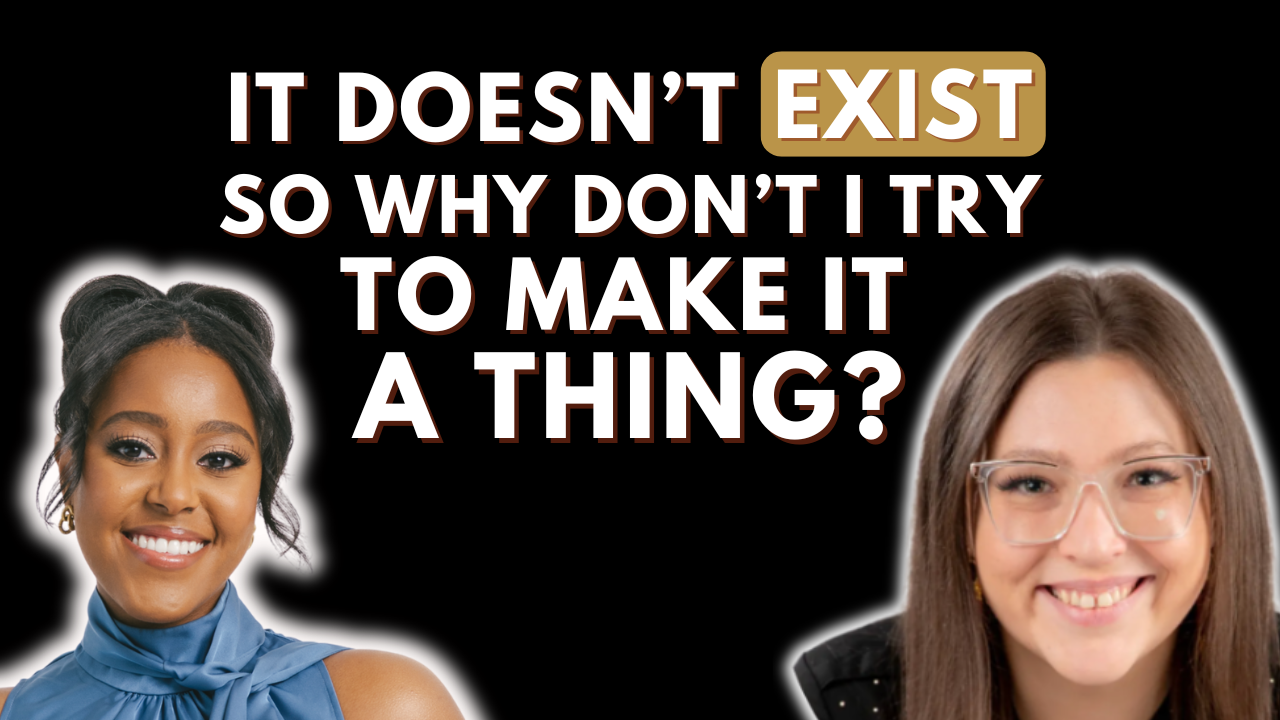
I was at a point where I wasn't working for the first time since I was 14. I had stayed in customer service the whole time, and I thought, how can I turn this into my job? It doesn't exist. It's not a thing. So I thought, why don't I try to make it? I have all the systems knowledge from managing other people's restaurants and food services. My knowledge from the ground up is good. I just needed to learn that higher-up knowledge. I started getting better, and I moved to Ottawa. I came across a Facebook ad for the ADAAWE Indigenous Business Hub, and they were having an event where you could come and take pictures of your jewelry and your art with their photo box and camera. I jumped on that, because I had been selling my dream catchers to my family on Facebook.
The first dream catcher I ever sold was a dream catcher keychain for $10 to someone's brother. I thought, oh, that's so random. I wonder if I can target people that actually want this. If I can sell this to people who don't really want it, perfect. It's good for me, it's good for them, it fills the need. A lot of people are now aware that we shouldn't be buying dream catchers at the dollar store — that's what I'm doing, teaching people that. That's how it all started. That's how I realized there are resources out there that I can use to build this business.
Naomi Haile 09:26
From that first dream catcher you sold on Facebook to now — you've expanded your services in such a phenomenal way. You do consulting, advising, you host and create experiences, you run workshops. Can you walk us through what that evolution looked like? Because you mentioned that you had the foundational skills from being in all of those other environments, managing people and systems, but there was that other layer that you were looking to build. So you learned it by doing and by, I'm assuming, having mentors and sponsors along the way.
Ashley Clark 10:07
Mentorship is invaluable. Finding someone that you can shop talk with, who knows more than you — so invaluable. I mentor early indigenous startup entrepreneurs now through the Indigenous Prosperity Foundation, and it's my way of giving back in the way that was so pivotal for me.
I was inspired by a female self-made millionaire. How could you not be? She had my instant attention and respect. Just being a woman in this male-led capitalistic society demands respect automatically. I ended up working in a program with her that she was creating — a pilot incubator program for business. I just soaked in all of the information I could get from her. I read between the lines on everything. I was back in university mode, fully engaged. And she told me, why are you not using your degree? She asked me, do you want to be the person sitting there making jewelry for ten hours a day, every day?
I realized, no, I don't want to sit there and make jewelry every day. Jewelry was healing for me. It sparked creativity. It sparked innovation. It sparked the whole idea of Bougie Birch. She really encouraged me to leverage my lived experiences, and she gave me the confidence that people wanted to hear the stuff I wanted to talk about — which was incredible, because after graduating in 2014 with an indigenous international relations degree and then going to work in restaurants, I can tell you there wasn't a soul in that building who had any interest in what I had to say. So it was so validating when she affirmed my lived experience. And now I'm able to use that as a tool for broader communication with Bougie Birch.
Naomi Haile 12:20
You mentioned that a major shift for you was realizing you didn't need to separate who you are — your identity — from entrepreneurship and what you were building, but that it informs what you're doing, it informs your strategy.
Ashley Clark 12:34
I'm a Leo, I'm a woman, I'm Mohawk, and I'm Bear Clan, and it's really powerful to say that all of those parts of my identity are here. I used to have imposter syndrome. I truly no longer believe that I can't do it — not in a narcissistic way, but you can't make something new if you're doing the same thing as everybody else.
How are you ever going to be a trailblazer? Someone called me a trailblazer once, and that word is in my vocabulary forever. Being a trailblazer is not hard, because I'm doing everything different than everybody else. That's the only prerequisite. You're creating your own journey. You are trailblazing. So it's just so important to believe in yourself. If you are thinking of something, or if you're in need of something, or if you see a gap that needs to be filled, there are other people out there who also need that. So if it's not done, just do it. The world is changing. It's the time.
Naomi Haile 13:44
When you first thought about how you could bring everything you'd learned and experienced into your offering, what was it like to design an immersive cultural experience under Bougie Birch that felt truly aligned with your values? Who was in the room? What was the intention? What were you not willing to compromise on when building those service offerings?
Ashley Clark 14:13
I wanted to show off the best parts of something that I truly love.
Growing up slightly disconnected from my culture gave me this really special appreciation for it when I finally became an adult and was able to engage with it in the way I wanted to. That's what I wanted to facilitate in the room. I wanted people to be able to experience something that I wasn't able to experience. I just wanted to show off the best parts to everybody and be able to create a better world for everybody.
Naomi Haile 15:02
I think there's so much in your practices and how you conduct business that I would love to ground this conversation in. You talk a lot about integrity, longevity, and stewardship. Could you share more about those values and pillars — and if you want to discuss the Seven Grandfather Teachings and the Seven Generations principle, which I'm so blown away by, and how they inform your decision making when creating, building, and sustaining Bougie Birch, I think a lot of people would find real value in that.
Ashley Clark 15:42
The Seven Grandfather Teachings are an Iroquois Anishinaabe teaching. I went to university, and I currently live and have built Bougie Birch on unceded Algonquin territory. The Algonquin are within that Anishinaabe language family. So the Seven Grandfather Teachings are something I hear about frequently and truly value. As Mohawk, we grew up around Anishinaabe neighbors — our territories are adjacent — and so cultures mix and encounter each other. I value what they value.
The Seven Grandfather Teachings are very simple. They're things like love, respect, humility, and bravery. The one that really resonates with me and my work is humility — on both sides. On the business side, we have to come with humility every single day, especially when you're teaching people. You have to meet them where they're at. Not everyone knows everything, and you can't just say it — you have to truly internalize it. You have to know this fact in your spirit. You can lead with respect and love because you're coming from such a humble perspective. There's no one that's better than anybody else. We're all in different places, and we're all here for different purposes.
On the participant or customer side, there's a real self-awareness among my customers — they know the historical, socio-economic context and history that this generation has become responsible for not repeating. That humility and self-awareness on the customer side is something I deeply respect. One of the two things I remember from political philosophy is that Socrates said the wisest man knows that he is not the wisest man. You can't know everything. It's physically impossible. So just having that open mind on both sides of the coin is what really leads my work.
The Seven Grandfather Teachings is, I believe, a Haudenosaunee tradition — my family's tradition. Basically, it helps you to be mindful that your decisions have been influenced by seven generations behind you and will influence seven generations ahead of you. When you're making a decision, you need to be thankful for what you've received from those who came before you, and gracious enough to consider the next seven generations. That's a lot. It's hundreds of years. We know how fast the world changes now — more things have changed in the last ten years than in the previous 150. We can see that with AI. And before we know it, we're going to be there. So it's up to us how we show up.
What a lot of people miss — and this is relevant to the Seven Grandfather Teachings — is that we are global citizens. The decisions we make have a ripple effect that impacts not just over time, but over place and space, especially now that everyone's connected. I have a pin that says, ‘Don't make me repeat myself, history.’ I think we have more control over that right now than humans have ever had. We need to keep our humanity going, because this system was built in a time when things moved slower. Now that we're aware, we can do that.
Naomi Haile 20:49
Practically, when you look at other businesses in your ecosystem — people who engage with Bougie Birch, fellow business owners, partners — what does that decision-making process look like in the day-to-day? In the small actions, in the team meetings, in how you conduct business, who you choose to partner with. What are some practical ways that people can get aligned and think about the long-term impact of how they operate?
Ashley Clark 21:48
All of the decisions, habits, or ways of working toward a more regenerative system will be different for every entrepreneur, because every business is different. It's more about the priorities you put to the forefront. I tell people all the time: I don't run a bottom-dollar business. That's not our goal. We have to make money to be sustainable, but our goal isn't to accumulate tons of fluid capital. That's the bottom goal of many companies, especially up until this point in history. I think of my business more as a social engine or machine that needs just enough to keep going.
Using that intentionality to build into your strategy and to measure impact is major. So many companies with traditional structures think, okay, I tracked my KPIs. Check, check, check. But what does that mean? Even if you're not the founder of a company, you're allowed to think about that. You're selling your hours to somebody, so you're contributing to the overall work and legacy of this company. What value do you want to put on your work and your engagement in society? What do you want your legacy to be? What kind of ancestor do you want to be? You can come with good intentions, but you need to make sure that your impact is aligned.
Naomi Haile 23:40
I think this also helps to protect from mission drift as well. Right — as you grow and reach more people and expand, if not held together and kept as a priority, you can lose sight of what the original mission was. It can evolve in some ways as you bring on new people and come across new ideas, but that core purpose for why you exist and why you're in business — is there anything you do intentionally today that helps you hold that integrity across time?
Ashley Clark 24:29
Definitely having a mission. Post it. Compare every decision you make to it. If you're offered something that is not aligned with your mission, then it's not for you. The opportunity is not for you — it might be for someone else. Maybe it came to you so you could tell someone about it. Just because you're good at something doesn't mean you've got to be doing that.
Just because it's an easy grant to get doesn't mean you should divert from your plan. You can always write a grant, you can always apply for a grant, invent a project, and get that grant. But what does that project mean for what you're doing? What's your purpose? You always need to remember your why.
Naomi Haile 25:15
That's why I call the show — this is called The Power of Why, for that very reason. When you say ‘pin,’ what do you mean? Like a literal pin you put on a shirt or a backpack?
Ashley Clark 25:30
I sell them at Powwows. They're fun — they're resell items. ‘We rise by lifting others.’ ‘Be a nice human.’ ‘Read books and dismantle systems of oppression’ — that one's aggressive. ‘Don't trade your authenticity for approval.’ And ‘Don't make me repeat myself, history.’
Naomi Haile 26:01
I love it. I'm so curious — I'd love to talk more about relational values. For a lot of what you mentioned about traditional organizations and how success tends to be measured, when it comes to relational values, it's really about the strength and continuity of relationships. How do you look at relationship building in the work that you do? You mentioned how important mentorship has been for you, and how you then mentor the next generation. What are relational values, and what can people learn from keeping relationships at the center of what they do and how they do it?
Ashley Clark 26:42
No one's buying your product in isolation — it comes down to people and what people want and the capacity people have. Even if you have a major manufacturing company, there are still people who have to fix those machines, build those machines, chart production. It always comes back down to people-centered. So if you don't, for example, treat your staff properly, you're going to have high turnover.
Everybody knows it costs more money to train a new person than to just make one person happy. It's cheaper. I know a lot of these things seem like common sense to me, and I can only contribute that to my brain reconciling my lived experiences with my formal education. I know that it's not common sense for everybody, and I don't label it common sense — because that's not a real thing. It's another social construct. Really, it just comes down to remembering that we are all in this together.
Naomi Haile 28:18
Right now, Ashley, you're in a deliberate, foundation-building season toward a brick-and-mortar third space for Bougie Birch. As you build toward this physical space, how are you thinking about the Seven Generations principle and teaching to ensure that this exists long after you, for the communities that come ahead?
Ashley Clark 28:45
I'm planning for it to be here in 20 years. Ever since I started Bougie Birch in the form she is today — when I started that incubator program in October 2023 — I've had this feeling that I'm reverse engineering an idea. That mentor of mine said, this is a starter incubator program, but what's your end goal? Where do you want this to be in 30 years? Write down broad steps, then start from the beginning and set it up that way from the start.
It's never too late to make systems changes.
Companies are doing systems changes all the time, and there's a reason it takes so long — because if they'd started from the beginning, it would be a different story. That's why the Hudson's Bay Company doesn't work anymore. It was the oldest corporation in Canada — it predates Canada. But there are economic systems that predate that. Indigenous economic ways of doing business — relational, regenerative, human-centered — the roots of those methods are still around. And guess what's resurging right now: indigenous ways of knowing and being.
My relatives have been here for 11,000 years. Canada's brand new. We've only tried this one way. Let's try another way. Think about that goal, think about that end point, and then build toward it. You need to be self-aware, and if you ask any entrepreneur, entrepreneurship is like therapy on a life-altering substance. You have to become the greatest version of yourself.
Naomi Haile 31:13
I think the same is true for life in general — to navigate everything that happens in this world demands that you do the internal work. You heal, you think about all of this. What are you most excited about for this physical space? What can people listening look forward to, and how can they get involved? Can you bring that back home to what Bougie Birch is all about and what you're really looking forward to when it comes to this new space?
Ashley Clark 32:11
I'm really looking forward to being on a ground floor. But if I have to be on a second floor, then it just gets worked into the plan as a growth phase. You have to be adaptable — it's all human based. I'm really excited for people to have a space where they can come, in their humility, to better themselves through art. It's how we raise our children — experiential learning. Go play outside. If you fall, you don't dwell on it. You say, good try, keep going. You learn from it. I'm really excited that people will be able to come to Ottawa and experience something where there is no gimmick. It is just transparent learning and support.
Naomi Haile 33:09
This is such a great conversation. Ashley, I really appreciate how frank you are and transparent. You're just like, let me tell you the most important things to understand. And these are all data points that people can listen to and take what works for them, what doesn't, and keep it pushing. But I really appreciate how honest you are and to the point, because there's a lot of smoke and mirrors out there.
Ashley Clark 33:48
Yeah. And I hate smoke and mirrors. So I don't do it that way.
Naomi Haile 33:50
Finding people who are really just about doing the work and helping people — that's what sustenance looks like. What does this look like for the future? Am I adding to this ecosystem in a positive way? These are all such fundamental questions. I think people really need to wake up and see the truth for what it is.
Ashley Clark 34:16
Yeah. It's our decision if humanity flourishes or flounders.
Naomi Haile 34:20
That needs to be another pin too. So what is the best place, Ashley, for people to support you and connect with you online, and eventually in person?
Ashley Clark 34:31
The best place to find us online is our website, www.bougiebirch.ca, or on any of the socials. We're not on X, but the rest of them we are on — just @BougieBirch
Naomi Haile 34:49
Amazing. We'll have links to everywhere you can find Ashley and Bougie Birch. Again, thank you so much for being here. It was an honest pleasure, and thank you to Invest Ottawa for this incredible partnership. Thank you to everyone who took the time to listen to this episode. We will catch you in the next one.
Listen to the episode on Spotify and Apple Podcasts
Connect with Ashley
LinkedIn: Ashley Clark
Website: www.bougiebirch.ca
Instagram: @BougieBirch
Facebook: @BougieBirch
Connect with Naomi
Website: naomihaile.com
LinkedIn: Naomi Haile
Instagram: @naomiahaile
YouTube: Naomi Haile