
"Saying Yes Changed My Life" - From HR Executive to COO, Thinking Like an Operator, and Leveraging AI in Business With Megan Paterson
Listen to the episode on Spotify and Apple Podcasts
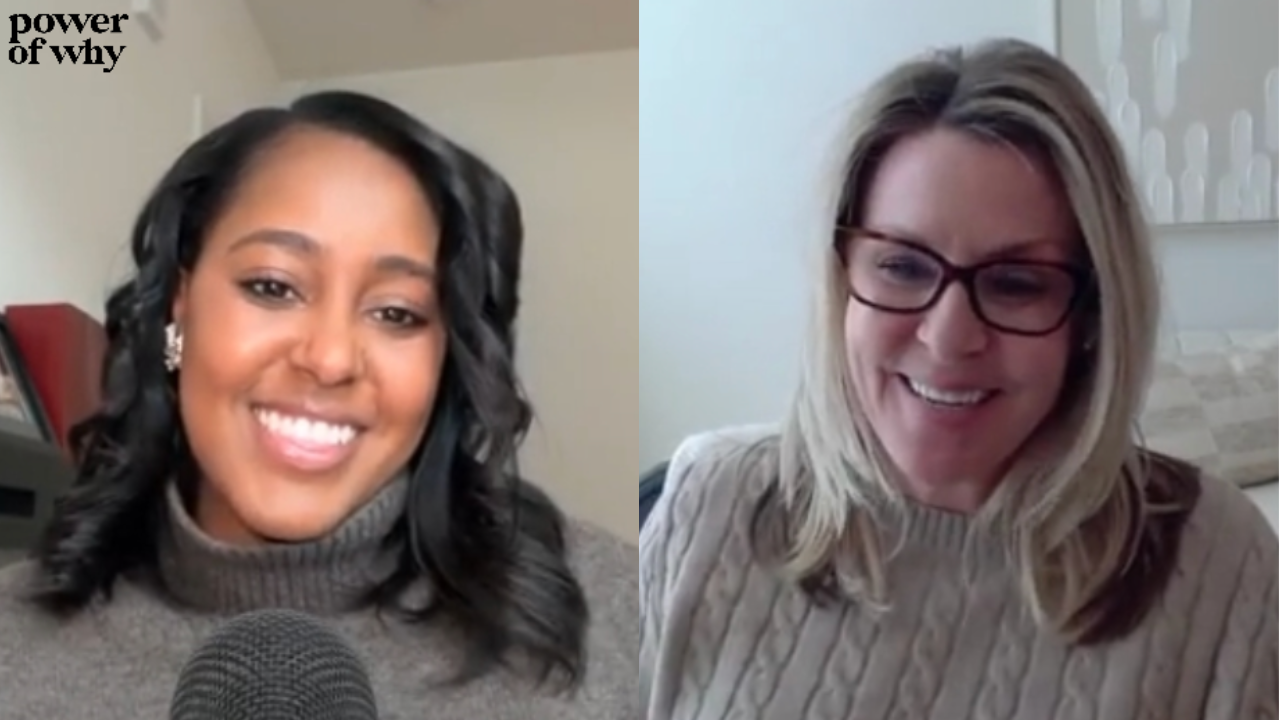
Listen to the episode on Spotify and Apple Podcasts
This episode is brought to you in collaboration with Invest Ottawa, Ottawa’s lead economic development agency for knowledge-based industries. We teamed up to produce this special podcast series to celebrate women leading in Ottawa during International Women’s Month.
In support of its Women Founders and Owners strategy, Invest Ottawa offers programs and services that enable and accelerate the growth and success of women entrepreneurs from every walk of life.
Visit www.investottawa.ca/women to learn more!
“When you're hiring your number two, your number three, your number four — make sure you're complementing your skills as a founder with somebody who does have an operational mindset.” - Megan Paterson
Megan Paterson is the Chief Operating Officer of Kinaxis, a publicly traded SaaS company that manages some of the world’s largest supply chains. She has spent nearly 18 years at the organization, watching it grow from roughly $20M in revenue to over half a billion, and from a privately held company to a publicly traded one.
Megan’s career began in recruiting at a consulting firm, and she steadily rose through the HR function — holding roles as HR Advisor, Director of Human Resources, VP, and Chief Human Resources Officer — before stepping into the COO role. The transition was unconventional, and by her own account, she spent five months saying no before eventually accepting. Her path has given her a rare vantage point on both the people side and the operational side of scaling a technology company.
Her areas of expertise include international expansion, mergers and acquisitions, building and scaling teams, and operational systems. Megan is also an angel investor, working with startups and engaging with entrepreneurial communities, including Invest Ottawa.
We Talk About What Matters
You’re considering a role that feels too big for where you are right now and you’re trying to figure out whether to say yes
You want to understand what it actually takes to move from a functional leadership role (like HR) into a broader operations mandate
You’re a founder or early-stage leader trying to build operational discipline without yet having the budget to hire a COO
You’re navigating the identity shift that comes with a major career transition
You want a grounded perspective on how to lead AI adoption inside a complex organization — beyond the hype
You believe in learning from people who’ve done the work, not just the theory
Looking for a specific gem?
[00:00] Welcome and introduction to Megan Paterson
[04:19] Growing up in a military family: moving often, resilience, and wanting a wider world
[05:13] How a childhood of staying within the lines shaped Megan’s appetite for risk
[05:35] The habit of saying yes before you’re qualified, and figuring it out from there
[06:38] The HR skills (people, leadership, problem-solving) that transferred directly into operations
[07:42] The muscle Megan had to build fast: financial acumen and company-wide systems thinking
[09:54] How to prepare for an operations role: finding mentors and digging into the financials
[11:22] Five months of saying no: Megan’s decision-making process before accepting the COO role
[14:16] The identity shift of moving from CHRO to COO and what it felt like from the inside
[16:08] What it means to think like an operator, and why Megan can’t walk into a Starbucks without seeing what’s broken
[18:03] Inheriting seven groups in crisis: how Megan decided where to start and how she built trust with her new direct reports
[18:39] Leading C-suite direct reports, swapping out senior leaders, and why she hired closer to the functional level
[23:58] Advice for founders and startup CEOs: you don’t need a COO yet — here’s what you do need
[26:07] Making sense of AI as a senior leader: what’s real, what’s overblown, and what’s urgent
[27:14] Why the narrative that “AI will eat SaaS” is overstated, and where it is and isn’t true
[28:36] How Kinaxis is approaching internal AI adoption: governance, change management, and enablement
[30:48] What “unlocking” means in practice, and why measuring AI ROI like a traditional investment is the wrong frame
[32:50] Looking back on a long career: Megan’s current mission and what she wants to leave behind
Conversation Transcript
Naomi Haile 02:18
Hi everyone. Welcome to another episode of The Power of Why podcast. My name is Naomi Haile, and today I am joined by the incredible Megan Paterson. Megan, how are you doing today?
Megan Paterson 02:31
Great, thanks. How are you? Thanks for having me, Naomi.
Naomi Haile 02:34
It’s great to be here with you and to have this conversation today. I think you’ve led such a phenomenal career across HR and operations and systems building in the tech ecosystem, and I think a lot of people will find what you have to share today really valuable.
Megan is the Chief Operating Officer at Kinaxis, a publicly traded SaaS company. She spent most of her career building and scaling tech organizations. She has strong experience in international expansion, mergers and acquisitions, and building teams and business units for performance. Giving back to the community is a core belief for Megan, and she spends her spare time volunteering, advocating against domestic violence, and fundraising for various causes. And for fun, she loves driving fast cars — just like me — playing tennis, and training her puppy, Piper.
Megan, so great to have you here. I’d love if you can start by sharing a little bit more about your origin story. How you grew up — were you someone who was encouraged to color outside of the lines, or to stay within them?
Megan Paterson 03:43
Great question. I’m the oldest of four kids, and also the only girl, and so my origin story was really interesting. We moved around a lot, and as a kid, that’s really, really hard — you always have to give up your friends, you’re moving to different places, starting at new schools. But as a grown-up looking back, I’m really glad I had that experience, because it teaches you how to be resilient, adaptable, how to meet new people.
But when we talk about coloring outside the lines — that was not part of my growing up. Growing up in a military family, it was very much about the lines and staying within them. And when I think back to that, I think that’s caused me to be who I am, in that I didn’t want to stay in the lines. I did that my whole childhood, and I left home when I was 17, never looked back, and always wanted my world to be a little bit wider than that.
Naomi Haile 04:50
How would you say — and we’ll discuss more — but you’ve spent most of your career in HR and have since moved into an operating role as COO. How has your childhood, and just your experiences up to today, helped shape how you see risk-taking and coloring outside of the lines and going after things that are outside of the traditional or expected path?
Megan Paterson 05:13
I didn’t realize it at the time, but looking back, it’s so great when you look back on your fears and the decisions you made and ask how did you get to where you are. A lot of times I’ve been asked to take on things that I was not qualified for, and I don’t know what it was about me that made people trust me or think I could do it, but I pretty much always said yes right away — with the exception of my last change.
And had I not said yes, I think life would have looked really different. You don’t always know you’re going to do it really, really well. But in the past, I just said yes, and then I figured it out. It’s not like a “Catch Me If You Can” kind of thing — I’m not going to fly a plane or do heart surgery. I know my limits. But when I look back, people gave me jobs and opportunities that are, you know, a little bit alarming, but it worked out.
Naomi Haile 06:09
Going back — as I was doing research, I noticed that you started as a recruiter at a consulting company, and you’ve had a steady rise to HR Advisor, Director of Human Resources, VP, CHRO. What muscles would you say you really built throughout your HR career that lent themselves well to the Chief Operations role?
Megan Paterson 06:38
People and leadership, I think, is consistent between the HR side and the operations side. You’ve got to understand people and how they work, and you’ve got to be a great leader. That’s very consistent.
And then the other thing that I think is really consistent between those two roles — it’s an unusual progression; you don’t see a lot of people going from HR into operations — but it’s problem solving. You’ve got to solve a lot of problems when you’re working in HR, and it’s the same thing in operations. So I think those two skills have carried over really well.
Naomi Haile 07:12
And what muscles would you say you had to flex to really thrive in this role? Because a lot of what you’d mentioned around problem solving, people skills, critical thinking — there are constant fires that you have to put out and bring in the right people to problem-solve together. But where would you say you focused most as you got ready to say yes to the role and really enter it?
Megan Paterson 07:42
I think what took me a bit by surprise was that I wasn’t quite ready on the financial side of things. As executives, we always do those finance-for-non-financial-executives courses, so I could speak to it. But once you’re actually responsible for it, it’s really different. So that was a muscle I had to learn quickly — really diving in on the financial side.
The other thing was that I always thought company-wide in my HR role, but in operations, it had to be at a much higher level. You’re responsible for everything; you’re owning it. You have to know how the organization is connected, how the groups and what they’re working on affect each other, and where those unlocks are. That was something new for me. It wasn’t as hard to adapt to as the financial side, because I’d already been thinking that way somewhat, but it was a deeper level than I was expecting.
Naomi Haile 08:47
It’s so interesting — when I first started in business, I was working in compliance. I studied finance at the University of Ottawa, and later on, after spending about five or six years in that world, I wanted to delve more into the people side of business. So we almost flipped in terms of how we approached it.
HR is really focused on ensuring your organization has the right people in the right roles, and that they’re supported well — on a development track and able to optimize in that space — while Ops is more focused on how the organization runs and ensuring it’s effective, efficient, and that you have smooth systems.
For someone who has their eyes on the operations track — who is already in business but maybe in a different function — what should they expose themselves to right now? Who should they build relationships with? How should they think about becoming a deep systems thinker?
Megan Paterson 09:54
I think one of the things that’s really important, regardless of where you’re going, is finding mentors — finding people either in your organization or in other organizations, which I think is even better, who are doing the operations role. What did it look like for them?
Most people are pretty open to helping others and talking about their journey. People are really nervous to reach out, but most people — no matter how busy they are — are happy to help when they see someone who’s an up-and-comer looking to get into something new. We all want great people around us, and it’s a big ecosystem.
So finding mentors is really, really key. Finding people who are doing that job or working at companies you admire is a great way to figure out: is this for me, and what does it actually look like day to day? And then the other thing, as I mentioned, is the financials. Dig deep into the financials, or else you won’t be prepared for the operations role.
Naomi Haile 10:54
Was seeking out individuals who are in the role and building those relationships a big part of you saying yes? Because you mentioned that you said no for five months as you were deciding. Can you talk a little bit about your decision-making process when you were encouraged to step into that role — what you were thinking about, what your hesitations and fears were, and what helped you get to the other side?
Megan Paterson 11:22
I knew Kinaxis was at a point where we needed a COO. We were creeping up to about 2,000 employees, 33 countries, almost half a billion in revenue. I knew we were at that point where we really needed it. Our CEO at the time was amazing externally — with customers, shareholders, investors — but we were getting to a size where it was really unmanageable for him to do both. So I’d been talking to him a lot about getting a COO, and he wasn’t ready for it.
And so the day he came to me and said he was ready, I was so excited. I said, I am going to find you the best COO. He said, Whoa — I’ve got a caveat. And I thought, I wonder what that could be. He said, It has to be you. My mouth was on the floor. I thought, this is a big, important role for a publicly traded company. This is not me taking on an HR manager role or reporting to the CEO for the first time. This is significant.
We talked about it for five months, and I kept saying no and he kept saying yes, and we argued about it. I really loved my role as CHRO. It was a big part of who I am. I was a self-described HR geek. I didn’t want this job, and I didn’t think I could do it well.
After about five months, I probably should have taken my own advice and talked to others. But what was interesting about the COO role is it looks really different at every company. It’s a fluid role depending on what the company needs at that time. Honestly, he just wore me down. It wasn’t a big plan or a strategic aha moment. He literally just wore me down.
And in the first month, what I realized was what he needed in a COO — and what Kinaxis needed — was somebody who knew the business, which I did; somebody he trusted, and we had a great partnership; and somebody willing to make tough decisions, which I’d been doing the whole time as CHRO. So I thought, I’ve got those three things. I’m just going to do the very best I can, and we’ll see what happens. But the first year was scary. I questioned myself a lot.
Naomi Haile 13:42
Wow. Was there any particular identity shift? And what was some of the internal work you were doing? Because transitions, in any sense, are not easy — and then the magnitude you described, given the state Kinaxis was in and what it needed to grow and thrive and scale.
What were some of the mindset shifts or identity shifts you were doing internally to get to a place where, after year one, you were like, okay, I’ve tried this on and it feels good now?
Megan Paterson 14:16
The first thing I really noticed was outside of work — at parties or meeting new people, and someone says, what do you do? Which is a very North American way to start a conversation. My whole life, I’d say, I work in HR. And I’m never the person who leads with my title — I’m just not a fan. So I’d always say, I work in HR. And then suddenly I’m like, no I don’t. And how do you walk that back?
But also the way that operations worked and the groups I was running at Kinaxis was very different than what you’d see in an operations role at, say, Procter and Gamble or Cisco. So I felt uncomfortable saying I work in operations. Two and a half years in, I’m still a little bit uncomfortable with that. I often say I work in software, and then if somebody asks what I do specifically, I’ll say my title.
It was an identity shift for sure. And it was hard for me to have somebody else leading HR. I was leading seven groups, one of which was HR, but there was a leader in HR, and it was really hard for me to not know all the things going on the way I did when I was leading that function.
Naomi Haile 15:36
It’s interesting — now that you’re overseeing all those different functions, you said something I thought was so interesting: that you can’t go anywhere — whether it’s a restaurant or a store — without seeing things that need to be fixed. I’m sure you were like that in your HR role too.
But what does it actually mean, in your mind, to think like an operator? And how can someone build that deliberately?
Megan Paterson 16:08
You’re right, there’s a little bit of that in HR too, but I really noticed it when I moved into this role. And my husband probably wants to kill me, because everywhere we go — great example, Starbucks. There are so many people waiting for their drinks, too many people on cash and not enough people making drinks. It’s so simple. And then you’ve got the mobile orders, which makes everything even worse. I just want to jump behind the counter and show people where to go.
Or if you’re ever at a fast food place and the Uber Eats driver comes in — just have a dedicated person who does Uber Eats, and when there are no Uber Eats orders, they work the counter. It’s hard though, because the person waiting on Uber Eats wants hot food, and that driver is going to get tipped if the food’s hot, but you’re standing there in their establishment waiting.
I see this everywhere I go, and a lot of times I think it’s really simple fixes, which makes me think about what’s next after Kinaxis — would it be cool to help all these companies? I just see things everywhere that need to be fixed and I want to jump in.
Naomi Haile 17:15
Yeah, it’s interesting. With some of the consulting work I do, I’m an operator in a lot of these agencies, and I’m typically surprised when I go in and see what’s happening on the back end — what’s not always visible to a client, especially for service-based businesses.
When you stepped into the COO role and mentioned that you inherited kind of disparate groups — what did that actually look like in operational terms? How did you identify where to start, given that you’d also been in the organization for ten-plus years and had a lot of institutional knowledge?
Megan Paterson 18:00
Which I think probably really helped me, for sure. Basically, my CEO gave me everybody he didn’t want to deal with. I had the CTO reporting to me, the CIO, the Chief Strategy Officer, Global Customer Care, Global Partners and Alliances — all of these areas that I knew a little bit about but really didn’t know that much about.
So the first thing I really did was recognize that if I was going to do this job and do it well, I needed to be able to help each group be better, and I can only do that if I’ve got really strong leaders that I trust. A lot of that early work was swapping out some leaders and making sure I had people who were functionally really strong at their jobs — because that’s a gap for me — but also great people leaders and people who could be okay with me asking really stupid questions, and then we could work together to make their groups better.
But it was a lot. It was like seven things on fire and you have to figure out where to start. I took my cues from the executive team — what are the burning issues, where do we really need to start? And the first group was cloud services.
We have a really interesting product at Kinaxis. We were not built SaaS-native — we’re a 40-year-old software company, so we have a lot of technical debt, and moving to the cloud is harder for us than for a company built on the cloud. The percentage of revenue for my cloud services team was way more than it should be — close to 14 or 15% of revenue. In an ideal world, it should be around 10%. So I thought, that’s my biggest fire.
How can I work with this leader to find some unlocks — to make that team more efficient, change the way we’re migrating customers, and figure out what that looks like? That was a good year and a half working with that team, and I’m pretty proud: we got it down to 10.4%.
Then I felt like we’d done all we could do, and the next unlock was really product changes. I gave cloud services back to product, which is frankly where it belongs more than under operations anyway, but in a much better position than how I inherited it. And I can see them working on the next phase of unlock now, which is great. That’s how I decided where to start — what was the biggest business issue, and for us, it was cloud services.
Naomi Haile 20:59
I’m really curious — at that level, when your direct reports are C-suite executives, what does that relationship typically look like? Reporting functions look different at the CHRO level. What do working relationships look like when everyone is very senior and seasoned?
How did you shift what developmental conversations look like? I know trust is a big key thing, but developmentally, I’d love to get a sense of that.
Megan Paterson 21:37
Trust is huge, and it was really awkward — probably way more awkward for them than for me, because we went from being peers to a reporting relationship. We’ve all experienced that at some point in our careers.
What I realized was that we may not have had the right people leading those groups, and we may not have had the right level leading those groups. We had a history of giving out some inflated titles, and sometimes, to really fix things, you don’t need a C-level. I think that’s what we were finding — we had all these C-levels, but the actual work wasn’t getting done in the ways we needed for the stage we were at. It’s almost like we hired too far in advance for where we needed to be.
So in all three C-level cases, I swapped people out and hired VP or Senior VP levels, because I needed somebody who was closer to the business, closer to the functional level of expertise, and could roll up their sleeves and get stuff done.
The developmental conversations were different with each of the three leaders. But during the interview process, I was very open and honest about my gaps and what I was looking for. And through that process, people self-selected in or out — they wanted to be a partner and wanted to work with somebody who maybe didn’t know what they were talking about all the time. I think it worked really, really well. The quality of leadership we got and the changes we made in each of those functions — I’m really proud of what we accomplished together.
Naomi Haile 23:19
Earlier you mentioned when the organization was getting to a point where it needed a COO. Obviously, every organization looks different, and I know you’re an angel investor, so you’re in conversation with a lot of startups.
For CEOs or founders who may not be able to hire a COO immediately, or have anyone in an operations function — and there are a lot of founders listening, given this is a partnership with Invest Ottawa — what would you say to the founder who doesn’t have that natural operator mindset and is very much a visionary and a builder? What would you say to get them to a point where they can scale, and have the funding to eventually hire that type of talent?
Megan Paterson 23:58
First of all, you should not hire a COO right away. You just don’t need someone at that level when you’re a startup. The fun thing about startups is everybody wears so many different hats. So when you’re hiring your number two, your number three, your number four — make sure you’re complementing your skills as a founder with somebody who does have an operational mindset, the ability to sit down and get it done, and take your ideas and make them reality. But they definitely don’t need to be a COO, and they probably shouldn’t be at that stage.
One of the great things I’ve found about working with Invest Ottawa is the resources they have for startups is incredible. So if you’re looking for that kind of COO expertise, they’ve got advisors. And it’s not just Invest Ottawa — there are groups like this across the country that exist to help startups be successful. Take advantage of those advisors. They have different boot camps and different programs.
Use all of those, because then you’ll see what the other side looks like — you’ve got the visionary side, and then you’ll see the more operational side. You don’t need to hire those people inside your company.
Yeah, and sometimes I think it’s helpful, Naomi, to talk to people outside even your own industry. The way they do things on the operations side can be really different, and I think that’s really good learning.
Naomi Haile 25:26
Yeah. I’m curious — you mentioned that you’re learning more about AI and what that looks like for your organization. I don’t know if you saw Matt Schumer’s essay — a lot of the points in there I don’t necessarily agree with — but how do you make sense of what’s happening right now in your industry and your organization?
What are you looking at coming down the line, and what kind of conversations are you having internally with leaders to get Kinaxis to a point where you’re leveraging these tools in a safe and efficient way?
Megan Paterson 26:07
I personally find it very exciting, but also very scary — which I think is normal. I think this is going to be one of the biggest shifts we’ve ever seen. I’m old enough to remember when we finally got emails on our phones, old enough to remember the internet. Those things were obviously also very big. But I think this is the next big thing.
I think it’s disingenuous for leaders to just always say AI will not take jobs. I think that’s patently untrue, but I do think AI is going to take jobs of people who don’t use AI. Regardless of what your role is, what your job is, what your level is — you’ve got to embrace it and figure out how to use it to make yourself better and to make your job better. There’s a lot of time we spend every day doing things that are important but not meaningful. I sort of see AI as a booster to help us with the mundane, routine things, but also to boost on the hard things and the cognitive things.
In our industry in particular, SaaS is getting hammered in the markets because of AI. There’s a narrative right now that AI is going to eat SaaS, and I don’t think that’s true. If you have a very light tech stack and very simple software, then it could be true. But if you’re looking at enterprise-level software companies like Kinaxis, like Workday — someone’s not going to write an AI that replaces you in a weekend. It’s too complex. We manage the world’s largest supply chains.
The narrative is not accurate. I think there’s truth to it, but it’s totally overblown and applying broadly when really it should be applying to lighter software applications.
Naomi Haile 28:08
When did the urgency around needing a plan really hit? Because I know you’ve engaged with more than two members of your leadership team to say, what tools can we use, what’s cleared, what’s been approved, what’s safe given the very sensitive field you’re in —
When did those conversations start to really pick up and become a top priority?
Megan Paterson 28:36
What’s interesting for us is we started using AI in our product years ago. Machine learning and AI has been in our product for five or six years now. So it’s the internal use of AI that’s a little bit newer for us. I’d say it’s been about a year since I thought, holy cow, we have to get on this or we’re going to be left behind.
And it’s interesting — we run some of the toughest supply chains in the world, so when we look at how we use AI internally versus how we use it in our product, they’re actually related. We have to be really careful about our developers using AI in work that goes into the product, because we want to make sure nothing gets exposed or ends up in the wrong place.
Governance is really important. I think sometimes companies over-rotate on governance — we’ve been guilty of that — and we’re just unlocking that right now, making sure our teams have the best models available while still having guardrails in place depending on the work they’re doing.
But giving people tools is just part of the answer. We’ve all read studies where AI initiatives are failing, and it comes down to people. They’re not comfortable using it, they don’t know how to use it properly, they’re not optimizing it. If you just use ChatGPT like Google, what you put in is what you get out.
That’s been a really interesting shift for us — we’re trying to really focus on change management and enablement, so that people know how to use AI to its best ability. Otherwise, we’re not going to see those gains.
Naomi Haile 30:32
You use the word “unlock” a lot in this conversation — unlocks, optimizers. Can you baseline define what that means and how you apply it in this AI conversation?
Megan Paterson 30:48
Yeah, unlocking to me is like — I see blockers everywhere. There’s something getting in the way that has potential but isn’t getting to the other side, and that’s what we’ve seen.
At Kinaxis, we’ll have a finance conversation and the finance team will say, well, only 5% of the team is using AI, so I don’t think we should invest in it — I’m paraphrasing, they didn’t actually say that, but that’s the sentiment. They want to see the ROI. But how do you measure ROI on something like this? That would be like trying to measure ROI on the internet 20 years ago. Looking back, that would be a crazy conversation to have.
You’ve got productivity measurements, all different kinds of measurements. A lot of the blocking around AI right now comes from our traditional way of thinking, but this is a totally new concept. I’m not at all saying you shouldn’t care about ROI — obviously in my role I care about ROI a lot — but in some places you have to step back and think about, okay, what we did before was great to get us here. It’s not going to help us get us there.
And what are those things? That’s where you find those little places that you can unlock thinking, which then unlocks the behaviors.
Naomi Haile 32:19
This was a really great conversation, Megan. Looking back on your entire career and where you are today — I know you’re probably very thankful and grateful that you said yes to that role. You mentioned briefly that your life might have looked different had you not taken it. For you, looking back on your career and the decisions you’ve made, what would you say is the mission you’re currently on?
Megan Paterson 32:50
I’m in the later phases of my career, so I’m thinking about what is next for me. The most important thing — I’ve been with Kinaxis now almost 18 years. I’ve seen us grow from about $20 million in revenue to over half a billion. I’ve seen us go from being privately held to publicly traded. It’s been a journey. It’s been amazing.
I want to make sure that I leave Kinaxis in a better place than I found it, and I know I already have, but I want to continue that work over the next few years. We have a new CEO in place who started in January. The future is very bright for Kinaxis. I want to be part of that, and I want to help make sure we scale and that when I do leave, it’s in a really, really great place.
Naomi Haile 33:38
I’m sure it will be. For those who are listening and would love to connect with you, what is the best place for them to do that? LinkedIn, I’m sure — but if there are other options, that’d be great.
Megan Paterson 33:46
Oh yeah, LinkedIn. I’m always on LinkedIn. I’m a big connector on LinkedIn, I love it. But also you can share my email address with your listeners — that’s totally fine. I’m happy for anybody to reach out.
Looking back in my career, a lot of people gave me their time, and they were probably really busy, and they probably didn’t know who I was, but they gave me that gift. So I’ve always believed in giving that back. I think it’s really important.
I’m happy to talk to anybody. I think the best learning comes from others’ experiences — what did they do wrong, what would they do differently, how would they approach it again if given the chance? If you can learn from others, that’s way better than learning from a textbook. That’s for sure.
Naomi Haile 34:22
This is great. Thank you, Megan, for making the time to be on The Power of Why podcast in partnership with Invest Ottawa. And thank you to everyone who has taken the time to listen to this episode. We will catch you in the next one.
Megan Paterson 34:34
Thanks so much, Naomi. I really appreciate you having me. This was a lot of fun.
Listen to the episode on Spotify and Apple Podcasts
Connect with Megan
LinkedIn: Megan Paterson
LinkedIn: Kinaxis
Kinaxis Website: Kinaxis
Connect with Naomi
Website: naomihaile.com
LinkedIn: Naomi Haile
Instagram: @naomiahaile
YouTube: Naomi Haile